Neighborhood guide

Sunnyvale's Eichler tracts

Joseph Eichler built roughly 11,000 homes in California. Around 1,100 of them are in Sunnyvale, spread across sixteen tracts — one of the largest concentrations anywhere, rivaling Palo Alto. Here's how the neighborhoods differ, what they cost, and what you can and can't change.

The short history

It started scattered, then it went big

Sunnyvale is where Joseph Eichler got started. In 1949 he built his first handful of homes on scattered lots in Sunnyvale Manor — before there was a company style, or a company.

The tracts came next. Fairorchard — 54 homes in the southwest corner — was Eichler's first proper Sunnyvale subdivision. Then the volume: Fairbrae and its Addition put more than 350 homes on the ground between 1958 and 1961, followed by Rancho Verde (1960–62) with its rare double A-frames, and Fairwood (1961–62), the last big push, a mile from what's now Apple Park.

By the mid-1960s Sunnyvale had sixteen Eichler tracts and roughly 1,100 homes. A few neighborhoods nearby borrow the look with houses by other modern builders — good houses, not Eichlers.

The tracts

Five neighborhoods, five personalities

Central Sunnyvale · 1958–60 · 350+ homes

Fairbrae

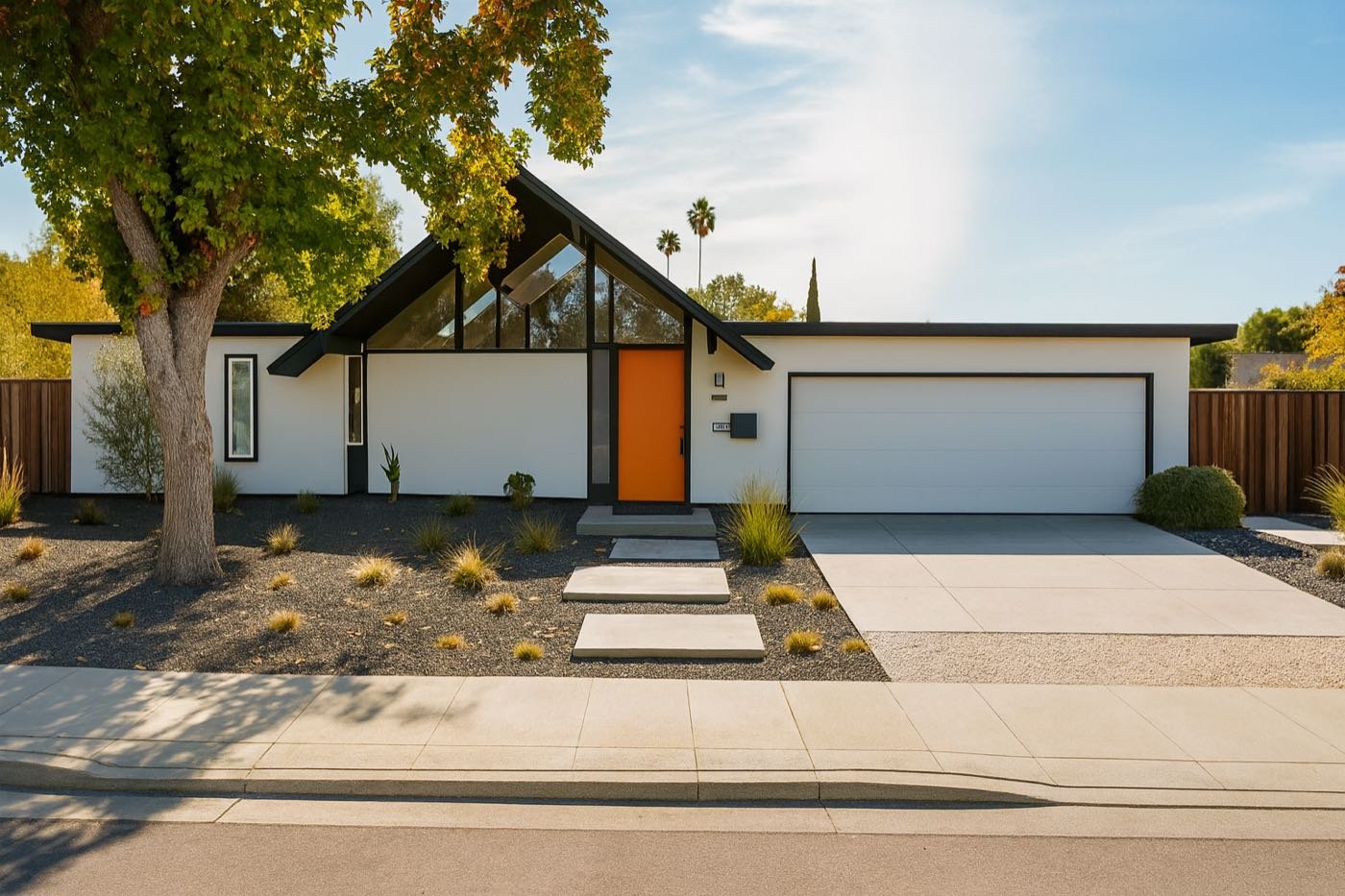
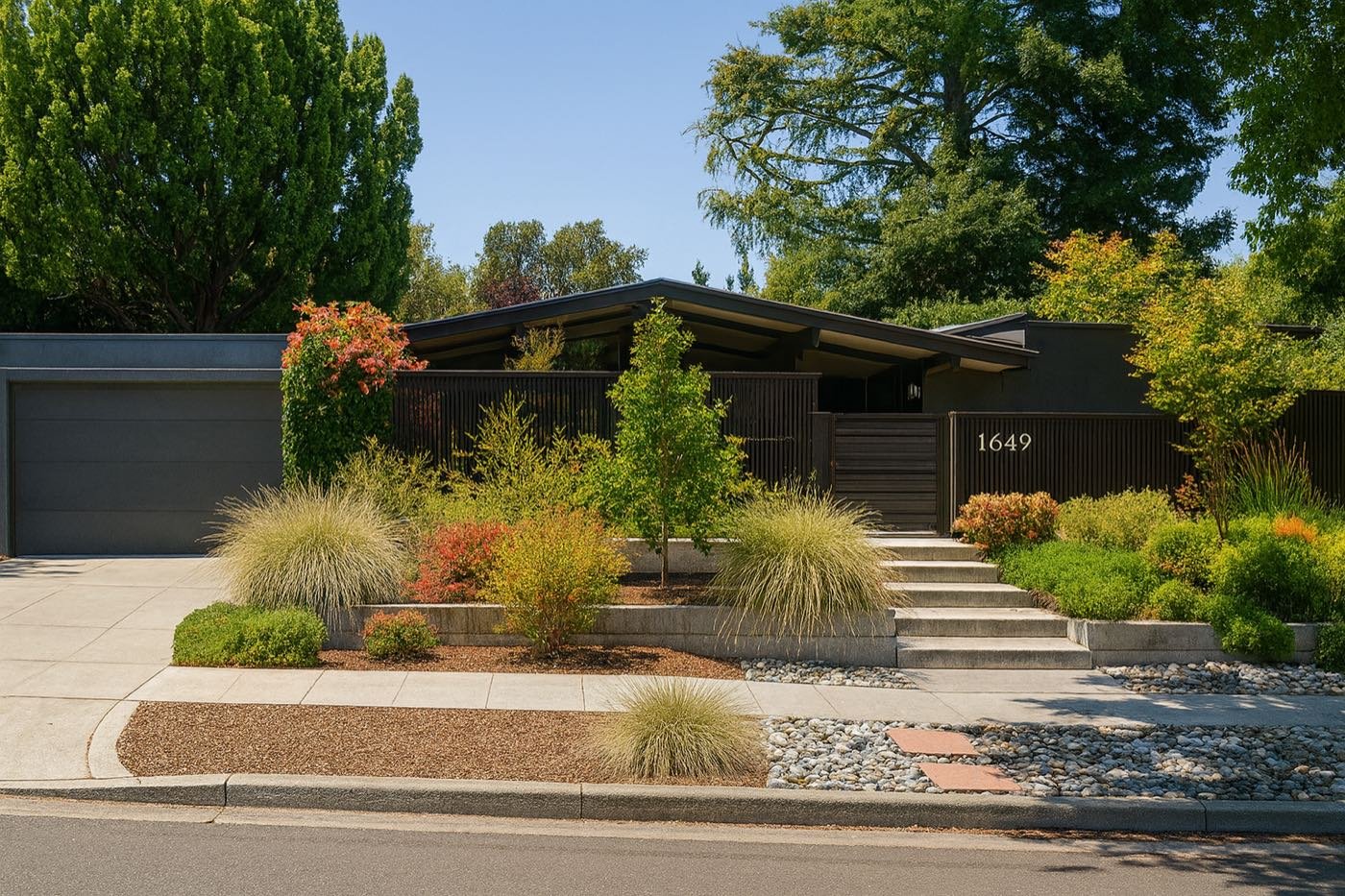
The quintessential Sunnyvale Eichler community and the most cohesive. Jones & Emmons and Claude Oakland plans, atriums and L-shaped courtyards, wide streets and larger lots — and the member-owned Fairbrae Swim & Tennis Club within walking distance of nearly every house.
SW Sunnyvale · from 1954 · 54 homes

Fairorchard

Eichler's first Sunnyvale subdivision — 54 homes on Wright, Edmonton, La Salle, Homestead and Helena, in courtyard and atrium plans from about 1,370 to 1,890 square feet. Steve Wozniak grew up in a Fairorchard Eichler on Edmonton Avenue. West Valley / Cupertino Middle / Homestead schools.

North Sunnyvale · 1960–62 · ~180 homes

Rancho Verde

Often called the best-preserved Eichlers in the city. Claude Oakland's Gallery model, rare double A-frames and atrium designs, on unusually wide lots — many over 8,000 square feet. Cumberland Elementary; a genuine hidden gem.

West Sunnyvale · c. 1961 · Eichler pockets

Cherry Chase

Four-bed / two-bath atrium Eichlers scattered through a larger mid-century neighborhood of 2,400+ homes, on fruit-named streets — Mango, Lime, Kumquat. Mature canopy, an active neighborhood association, single-story overlay, and Cherry Chase Elementary, a California Distinguished School.

NW Sunnyvale · 1961–62 · ~255 homes

Fairwood

Eichler's last major Sunnyvale tract — simplified, standardized plans (some with attached garages, a few experimental two-story models) on bird-named courts: Mallard, Kingfisher, Chickadee. A mile from Apple Park and firmly a tech commuter's neighborhood, with its own resident-adopted single-story overlay.

East Sunnyvale · 1949 · scattered lots

Sunnyvale Manor & the smaller tracts

Where it all began — Eichler's first homes, on individual lots, before the tract era. Add Primewood, Fairpark Addition, Rancho Sans Souci and Parmer Place and you have the rest of Sunnyvale's sixteen Eichler pockets, most now covered by the city's design guidelines.

Fairbrae

The most cohesive Eichler neighborhood in the city

Fairbrae started in 1958 with 78 homes on Pome, Quince, Sheraton, Pulora and Hollenbeck; the Fairbrae Addition added roughly 275 more in 1959–60, on streets like Sesame, Templeton, Torrington and Strawberry. The result is a large, remarkably consistent neighborhood — paneled walls and globe entry lights on nearly every house — organized around the member-owned Fairbrae Swim & Tennis Club.

Built
1958, with the larger Fairbrae Addition in 1959–1960
Size
350+ homes total, on wider streets and larger-than-typical lots
Architects
Jones & Emmons and Claude Oakland — atrium models and L-shaped courtyard plans
The club
Fairbrae Swim & Tennis Club, a private member co-op, is walkable from most of the tract and a real part of why families buy here
Schools
Cherry Chase Elementary, Sunnyvale Middle, Homestead High — a strong, stable set of assignments
Price range
Roughly $2.1M to $3.4M depending on plan, condition and whether the atrium is intact
The draw
Consistency. Buyers who want "the Eichler look" without hunting for it end up here.
Fairorchard

Where Eichler's Sunnyvale story starts — and where Woz grew up

Tucked into Sunnyvale's southwest corner near Homestead Road, Fairorchard is a compact tract of 54 homes on Wright, Edmonton, La Salle and Helena. Plans run from a 3-bed / 1,370-square-foot model to a 4-bed / 1,890-square-foot layout, in both courtyard and atrium configurations — every house individual despite the shared vocabulary. Apple co-founder Steve Wozniak grew up in one, on Edmonton Avenue.

Built
Eichler's first Sunnyvale subdivision, from the mid-1950s
Size
54 homes; courtyard and atrium models, roughly 1,370–1,890 sq ft
Setting
Southwest Sunnyvale near Homestead Road and the Cupertino border
Schools
West Valley Elementary, Cupertino Middle, Homestead High (Fremont Union High district)
Price range
Typically the low-to-mid $2 millions
The draw
Origin story, strong schools, and a small enough tract that owners tend to know each other
Rancho Verde

The best-preserved Eichlers, on the widest lots

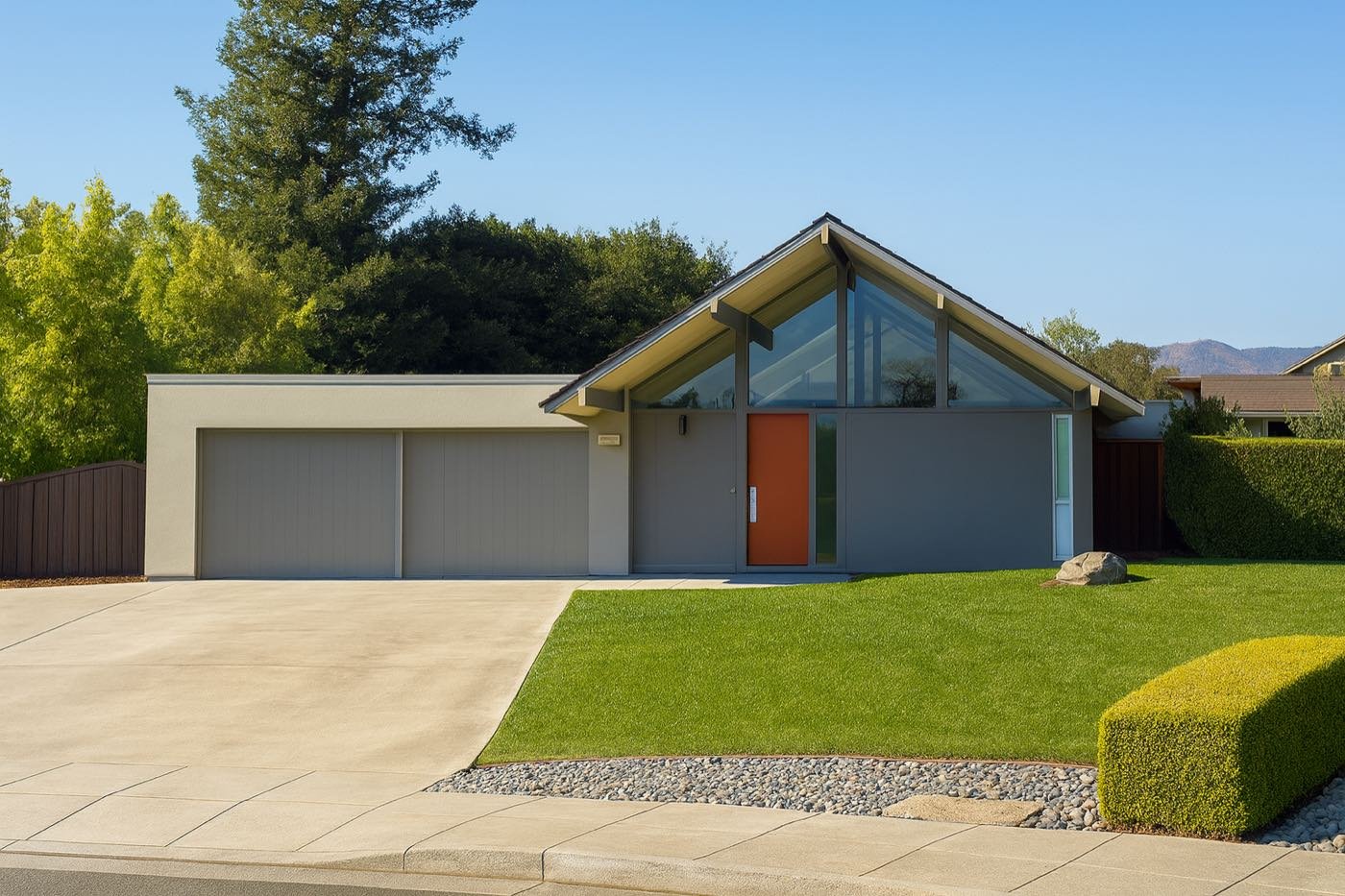
North of Central Expressway around S. Mary Avenue, Rancho Verde is about 180 homes built 1960–62 (including a 40-home addition sometimes called "Fairbrae 5"). It's known for two things: architectural variety — Claude Oakland's Gallery model, several rare double A-frames, atrium plans — and lot size, with many parcels over 8,000 square feet. Owners have kept it unusually original.

Built
1960–1962, plus a small addition
Size
~180 homes; wide lots, many 8,000+ sq ft
Architecture
Claude Oakland Gallery model, double A-frame variants, atrium plans — the widest range of any Sunnyvale tract
Streets
S. Mary Avenue, Ticonderoga, Trenton, Plum, Sherwood, Susquehanna Court
Schools
Cumberland Elementary, Sunnyvale Middle, Fremont or Homestead High
Price range
Roughly $2.0M to $3.3M
The draw
Preservation and space — the closest thing Sunnyvale has to a collector's tract
What sets the price

Why two Fairbrae Eichlers sell $400k apart

Same tract, same lot size, same year — and a wide gap at close. It comes down to a short list of things an automated estimate can't read.

  • Original plan vs. rebuild. An intact Jones & Emmons or Claude Oakland plan reads differently to this buyer than a house that's been opened up and squared off.
  • The atrium. On the models that have one, an intact, well-kept atrium is the single biggest premium. Enclosing it — once common — now works against value and, in the overlay tracts, against the guidelines.
  • Roof. Eichler flat and low-slope roofs are leak-prone. A recent foam or tar-and-gravel roof is money in the bank; an original one is a negotiation.
  • Radiant slab. Whether the original in-slab heating still works, has been bypassed, or has been repaired changes both cost and buyer confidence.
  • Remodel sympathy. Restored mahogany, refinished clerestory windows and period-correct updates hold value. A fought-with remodel discounts.
  • Glazing. Single-pane original glass vs. a tasteful dual-pane retrofit — comfort, noise and cost all move with it.

Rough context: Sunnyvale Eichlers run from around $2.1M in Fairbrae to the mid-$3M range for a large, restored Rancho Verde original; Fairwood starts a little lower. Well-preserved atrium models still draw multiple offers and can clear well over asking; deferred-maintenance houses sit longer and sell for less. Get a hand-priced range for your address →

Renovation & preservation

What you can change — and what the city has written down

Modernizing an Eichler is a balance between comfort and character. Kitchens, baths, insulation, HVAC and glazing are all fair game and commonly updated. The constraints are mostly on the outside — and in Sunnyvale, they're formal.

The city's Eichler Design Guidelines apply to a long list of tracts — Midtown, Parmer Place, Rancho Verde, Fairbrae, Primewood, Fairorchard, Rancho Sans Souci, Fairwood, Fairwood Addition and Fairpark Addition — with several of those also carrying voter-adopted single-story overlay zones. Expect limits on street-facing second stories, an emphasis on original material palettes (vertical wood siding, flat and low-slope rooflines), and clear discouragement of enclosing the glass atrium.

Our advice before you buy or list: know which plan you have, what the roof and slab need, and exactly what your tract's guidelines and overlay say about the change you're picturing. We'll walk it with you.

Livability

Dead center of Silicon Valley

Sunnyvale's Eichler tracts trade nothing for location — they sit inside the ring of every major campus, with schools that mostly hold up and lots bigger than the newer stuff.

0
Fairwood to Apple Park
0
Eichlers citywide, across 16 tracts
0
Freeways (85, 101, 280) within ~10 minutes
0
What an original 1950s Eichler cost new
  • Commute. Apple, Google, LinkedIn, AMD and Meta are all a short drive or bike; Caltrain and the Sunnyvale downtown are close to the central tracts.
  • Schools. Central Sunnyvale tracts feed the well-regarded Cherry Chase / Sunnyvale Middle / Homestead path; the southwest tracts sit in Cupertino Union and Fremont Union High.
  • Outdoors. Ortega, De Anza, Las Palmas and Mango parks are woven through the tracts; the Stevens Creek Trail and Baylands are a few minutes north.
The look

Sunnyvale Eichlers, in pictures

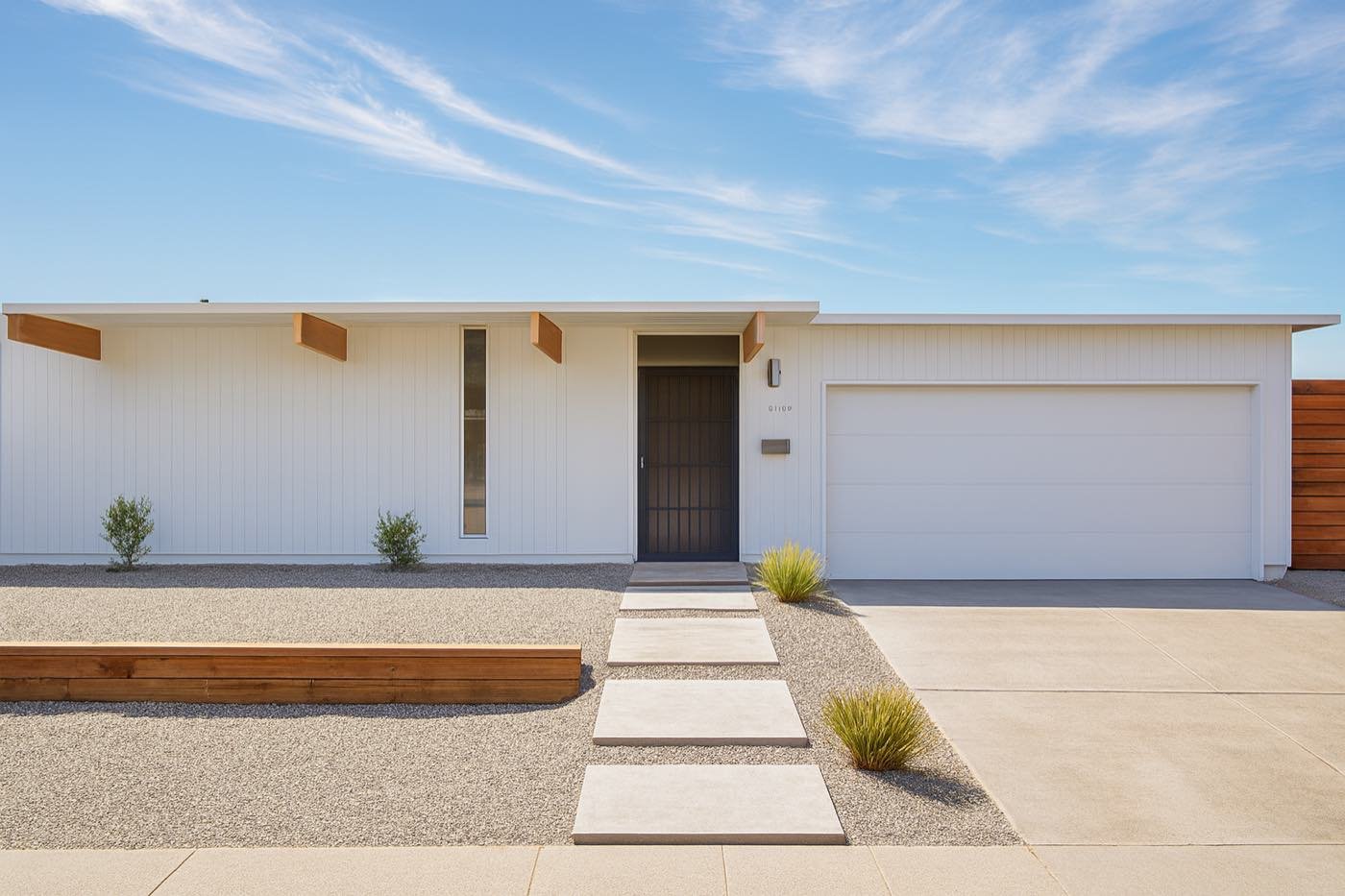
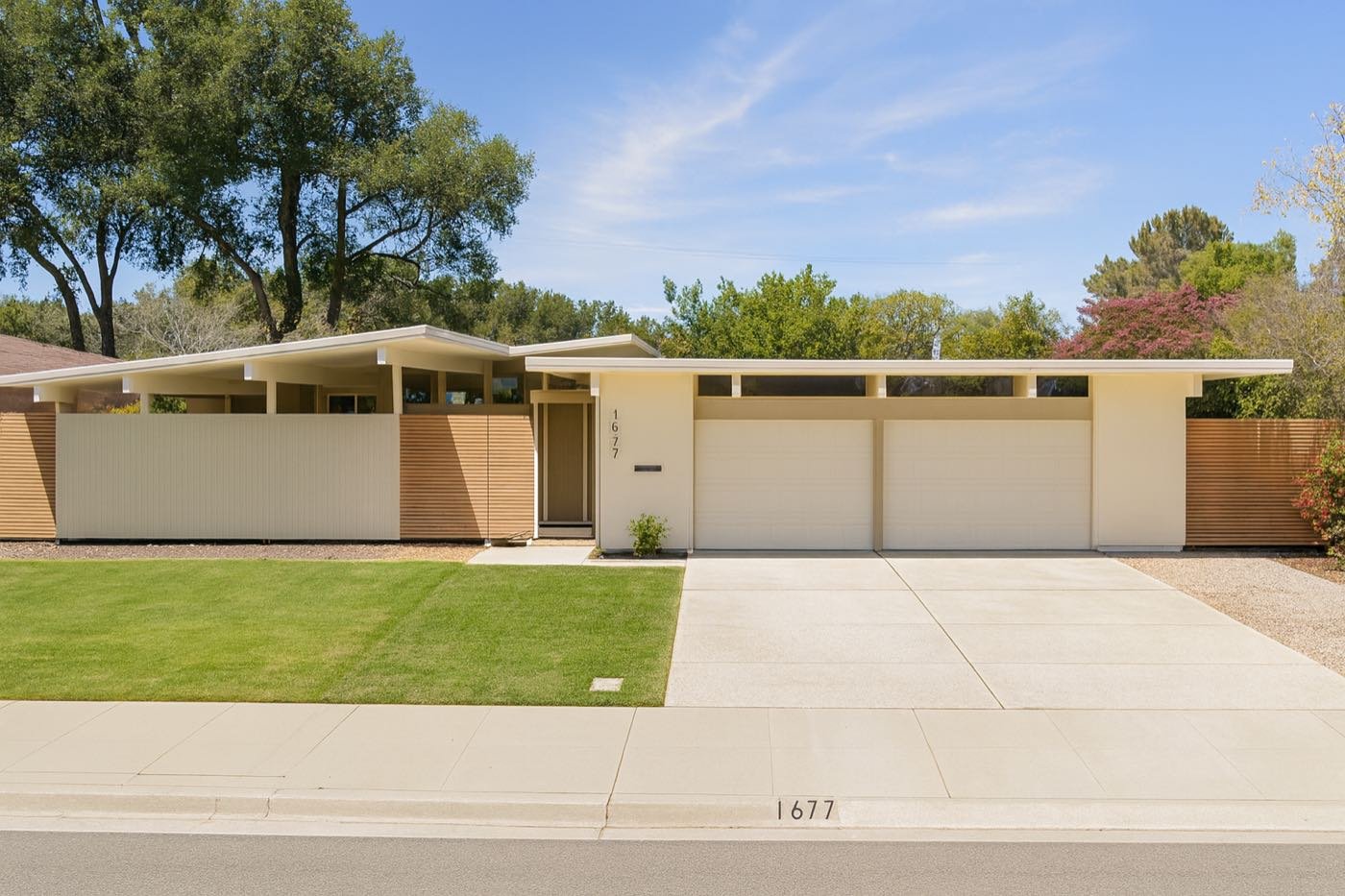
A cross-section of the tracts. Drop additional listing and neighborhood photography in here — each frame is captioned with the shot it's waiting for.

Next step

Want the real read on a specific house?

Send us the address. We'll tell you the plan, the likely condition issues, the comps, and what it's worth — by hand.